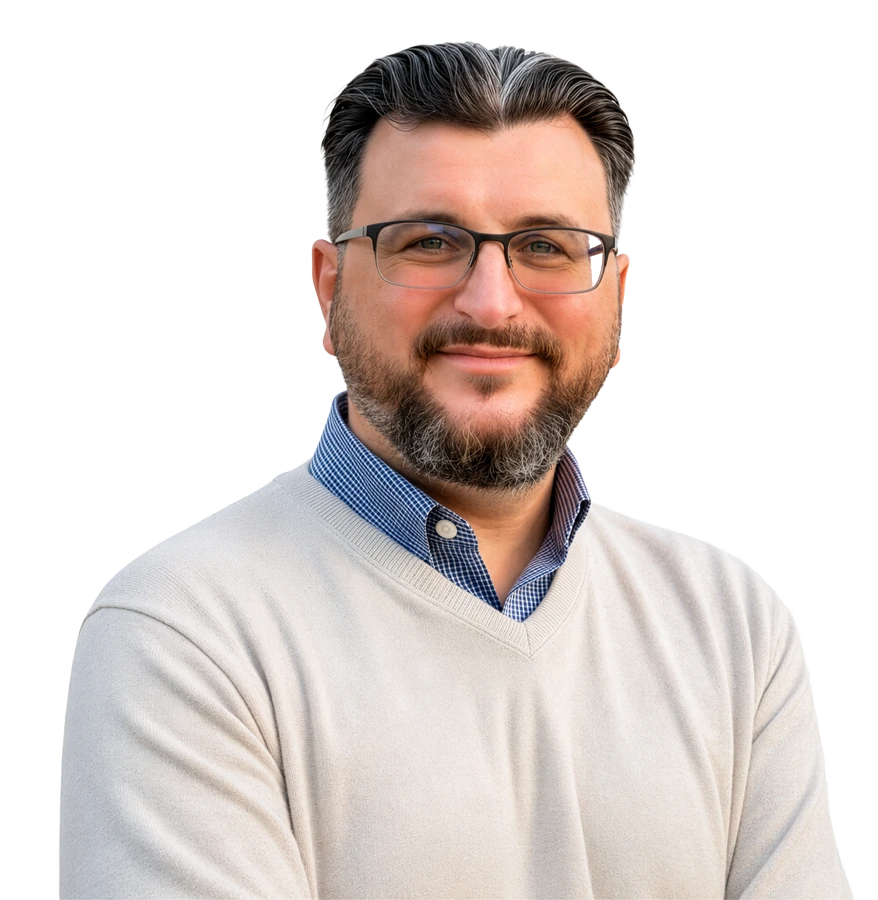

I write fiction and nonfiction about belonging, responsibility, leadership, technology, and the systems we build around ourselves. I spent nearly thirty years working across libraries, education, technology, public service, and institutional leadership, which gave me plenty to think about and, eventually, plenty to write about.
I'm especially interested in what happens when people find themselves inside systems they didn't create and have to decide how much of those systems they're willing to accept, challenge, or change. That shows up in my fiction, my nonfiction, and probably more of my everyday thinking than is strictly necessary.
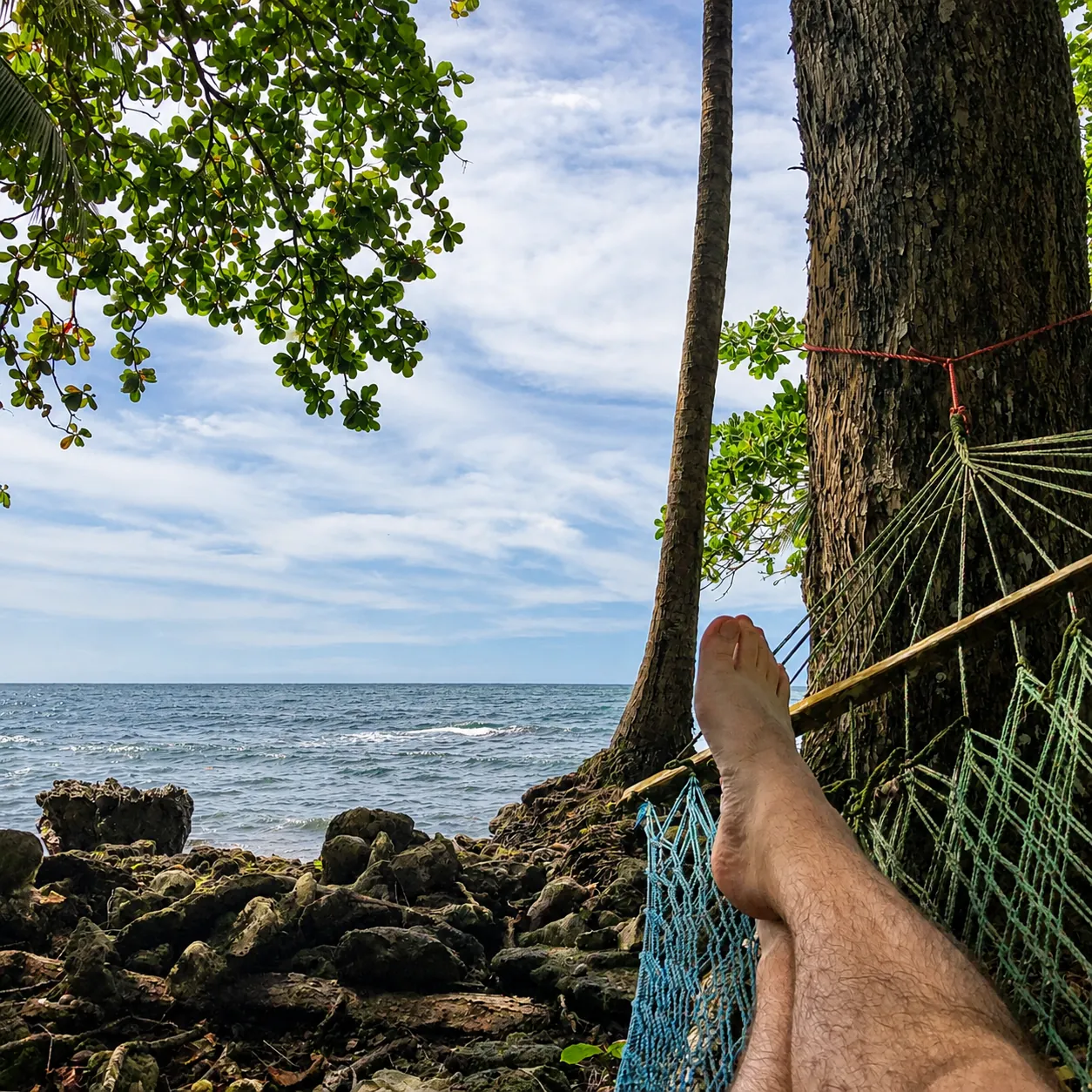
I'm also fascinated by artificial intelligence, travel, unfamiliar places, and the ways technology keeps changing how we work, learn, communicate, and understand the world.
More About Me
I grew up working. A lot.
Summers and most weekends were spent working for family businesses with my dad and stepdad, both in the office and out on job sites. Over the years, I worked around nearly every part of construction, along with industrial cleaning jobs that included things like warehouse floors and parking lots (I got to drive one of those cool vacuum trucks every weekend of my junior and senior years in high school).
Somewhere along the way, that turned into an obsession with remodeling houses. I still have a hard time walking into a room without wondering what I'd change. At one point, I even stepped away from libraries and education for a couple of years and ran a home-repair business. It gave me a chance to spend some time doing work with my hands again, which I missed more than I realized.
When I wasn't working, I read and read.
I could disappear into a lawn chair in the backyard with a stack of fantasy and science-fiction paperbacks and stay there for hours.
During my junior year of high school, an English teacher handed me a copy of Henry David Thoreau's Walden and told me he thought I should read it. It wasn't part of an assignment. He just thought I'd get something out of it.
He was right.
I had plenty of the usual teenage angst, and Walden helped me get more comfortable with my own thoughts. It helped me understand that being alone didn't have to mean being lonely, and that there was value in slowing down, thinking for myself, and paying attention to what I actually wanted out of life.
More than that, it was that book, in that class, that made me want to become an English teacher.
So I went to college to study literature. The plan was pretty straightforward: teach English during the school year and keep working construction and remodeling jobs during the summers.
Life had other plans.
While I was riding a motorcycle, I was hit by a car. The recovery took a long time. When I was finally ready to work again, I took a temporary job as a runner for the university library's document-delivery service.
I remember thinking there was something pretty funny about hiring a guy in a leg brace to be a runner.
The job involved driving a Cushman cart around campus, moving materials among twenty-eight university libraries. It was supposed to be temporary.
Instead, I went to library school.
That detour turned into a career that took me through libraries, education, technology, state government, nonprofits, public service, and institutional leadership. Along the way, I earned a master's degree in library and information science, another in educational technology, and a doctorate focused on leadership and educational equity.
Somewhere in the middle of all that, I also got married, raised a son, remodeled a lot of houses, read a ridiculous number of books, traveled whenever I could, and accumulated nearly thirty years of experiences I didn't yet have enough time to write about.
Writing fiction grew out of all of that.
It gave me a way to take some of the things I'd spent years watching people wrestle with, institutions, rules, power, responsibility, belonging, technology, and turn them into stories where those questions could actually play out.
You can see pieces of that throughout my work. Earthlog: My Not-So-Normal Sixth Grade Year is about belonging, friendship, and what happens when the unfamiliar suddenly becomes personal. Letting the Good Ones Go looks at what institutions do to people when the systems stop making sense. Reflective Leadership is about the everyday choices involved in leading other human beings. And The Logistical Edge takes many of those same questions and pushes them into a future where technology and systems have become almost impossible to separate from daily life.
These days, I'm slowing down a little, working less, writing more, and planning to see a lot more of the world. There's still an enormous amount of it I haven't seen, and I'm increasingly interested in spending enough time in places to understand them instead of just passing through.
I'm also still working my way back from a few surgeries connected to that motorcycle accident all those years ago. I'm moving a little slower than I used to, but the plan hasn't changed. There's a lot of world left to see, and before too long, we'll be exploring much more of it.
I'm still writing, still reading, still following artificial intelligence probably more closely than is healthy, and still walking into houses and immediately thinking about which wall I'd move.