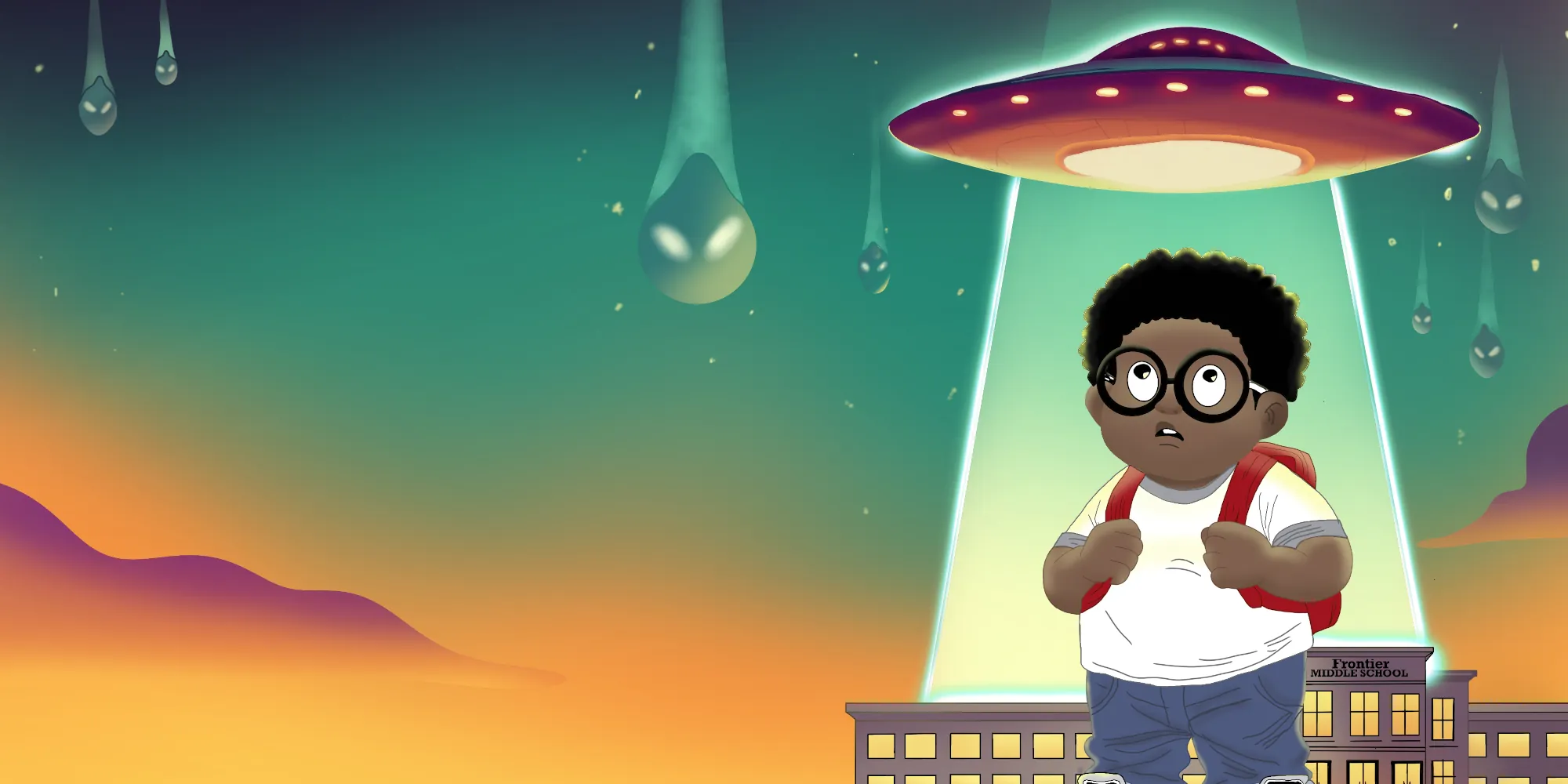
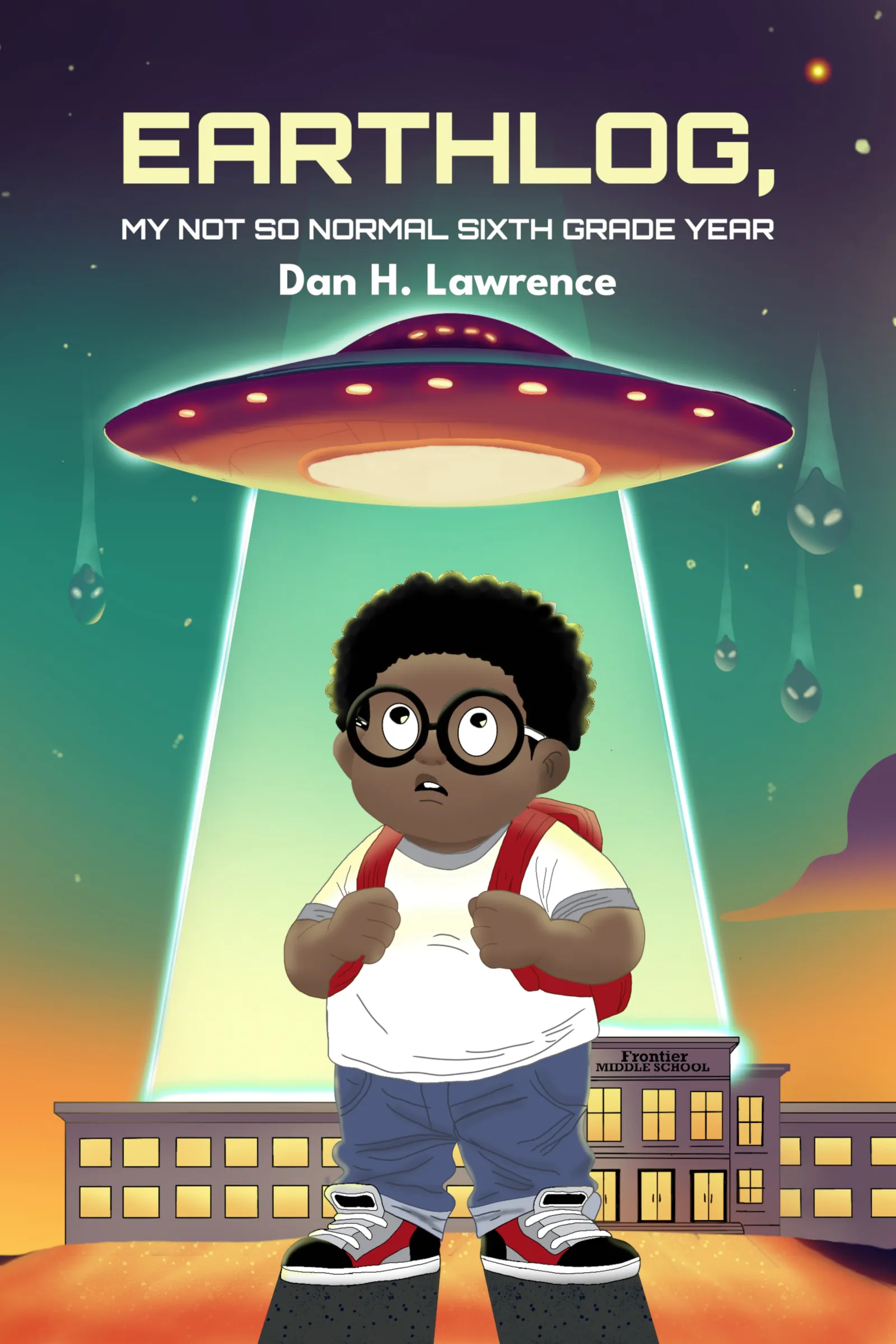
The world of Earthlog looks a lot like ours. Kids ride city buses, forget locker combinations, play video games, sort themselves into cafeteria cliques, and try to get through middle school without becoming the day’s most embarrassing story.
Then the aliens show up.
The visitors come in peace, hoping to learn about humanity and share some of what they know. Pretty quickly, first contact turns into government meetings, integration programs, purpose-built settlements, school welcome clubs, and a lot of adults using official-sounding words while hoping nobody asks a question they can’t answer. Governments had known about the visitors for years before anyone said a word, which surprised almost nobody once people thought about it.
Humans call the visitors the Sylvani, the closest we can manage to a name that, in their own language, sounds more like wind moving through trees. They’re tall and slender, with large dark eyes, teardrop-shaped heads, and skin that shifts through silver, blue, green, and purple depending on how they feel. Their voices are soft and musical, closer to a woodwind than anything human.
Those color changes work about the way a raised eyebrow, a blush, or a cracking voice works for us. The Sylvani read each other’s moods at a glance without hearing anyone’s thoughts, which makes pretending to be fine considerably harder. Humans discover this fairly quickly.
Their home planet has two moons, thicker air, wind seasons strong enough to shut down a city, cities built underground, and food grown in climate-controlled domes. Their schools don’t divide the day into separate subjects the way ours do. Many of their games are built so the group wins or loses together, and their art works through light, sound, and movement more often than paint or paper.
Curiosity can make life complicated in a culture that places so much value on harmony. Zin has always asked more questions than most Sylvani are comfortable with, and that curiosity is part of what eventually brings them to Earth.
Life here requires some adjustment. Sylvani settlements mix ordinary human construction with glowing plants, open living spaces, altered air systems, and architecture designed for bodies that aren’t shaped quite like ours. Security gates and government oversight surround places where families are also unpacking boxes, making dinner, going to school, and trying to figure out what counts as normal now.
Some humans welcome their new neighbors. Others stare, protest, spread rumors, or decide the Sylvani need to act more human before they’ve earned a place here. Most of that tension plays out far from diplomatic meetings. It happens in neighborhoods, classrooms, hallways, and cafeterias.
At the center of Earthlog is Frontier Middle School and Jayden A. Williams, a kid who narrates his own life like it’s an episode of his favorite show. Jayden started recording his “Earthlogs” when sixth grade made him feel like he’d crash-landed on a strange planet of his own. He models himself after Captain Jaxon, the hero of Star Quest, who’s always trying to talk some suspicious new planet out of doing something catastrophic.
Then an actual alien shows up at school and starts asking sincere questions about tacos, dodgeball, competitive board games, and why humans act the way they do. For once, Jayden’s Star Quest comparisons aren’t just jokes. They’re the closest thing he has to a language for understanding Zin, a school changing faster than anyone expected, and his own life between two households that don’t run by the same rules.
The biggest questions in Earthlog rarely come from outer space. Most days they show up in the cafeteria: who saves someone a seat, who laughs, who stays quiet, who speaks up, and who gets told they need to change before they can belong.
The science fiction stays close to the ground. Alien technology sits beside cafeteria trays. Interstellar diplomacy gets tangled up with school dances, dodgeball games, family dinners, and friendships that keep changing shape.
Jayden, Zin, and Naomi are all learning how to live between worlds. None of them has it figured out. They are trying to make room for one another, hang on to the parts of themselves that matter, and get through middle school with at least some dignity intact.